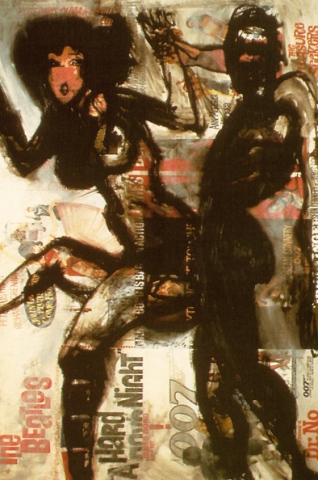
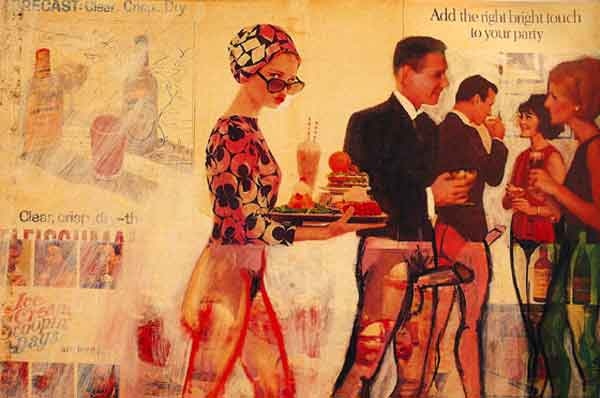
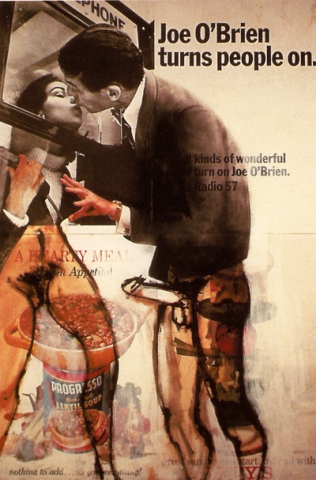
Erotic Series
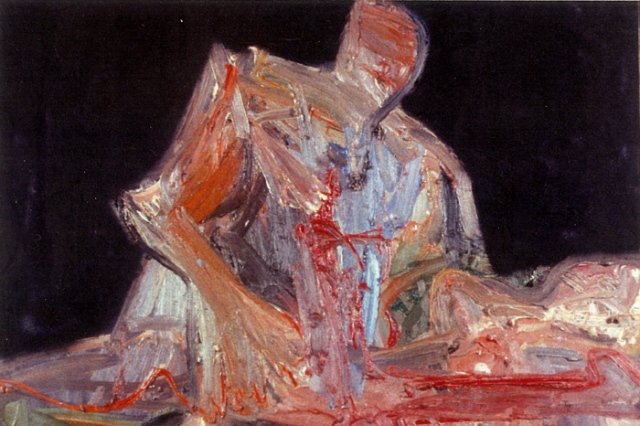
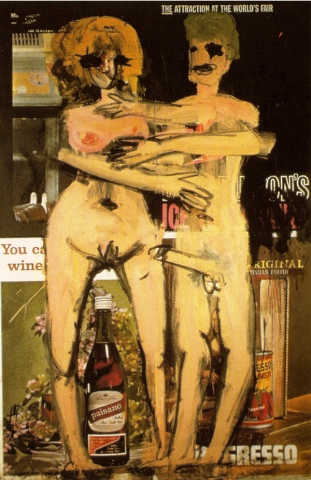
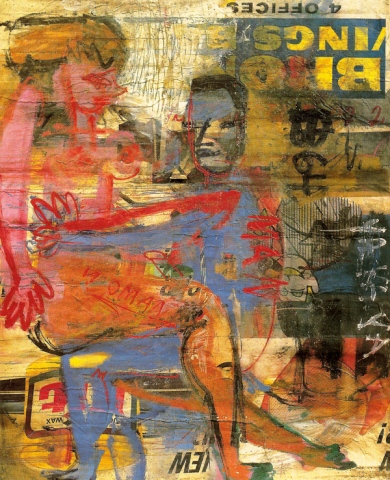
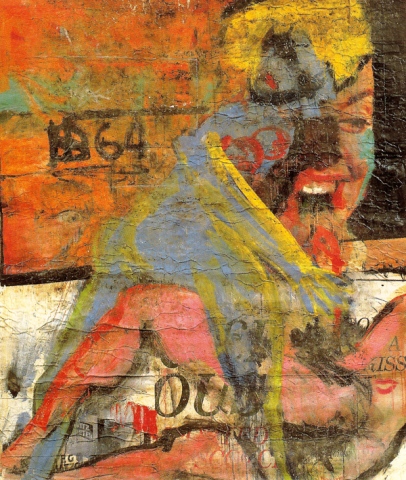
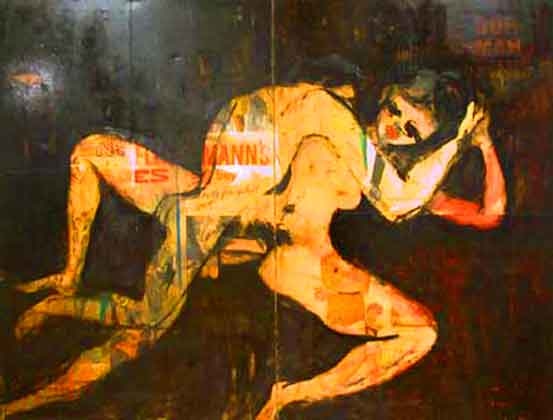
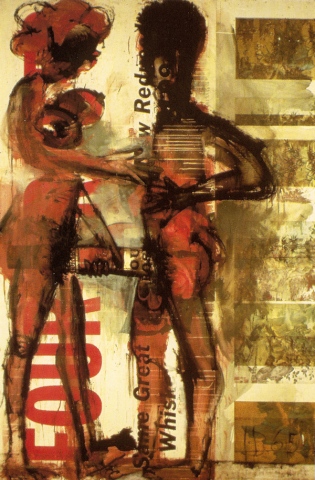
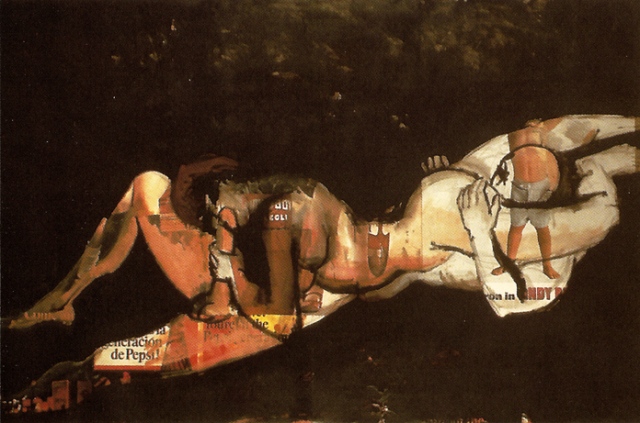
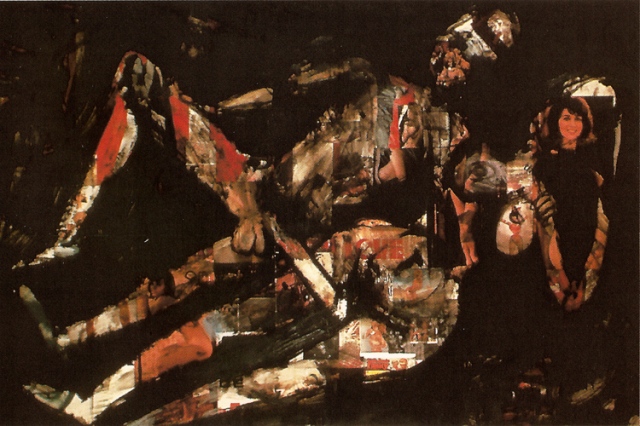
Herbert Brown's lines are meant not to amuse but to appall; dirty paintings
for clean Americans. Commercial art is crucified, and then the whole is smeared with marks, and sealed—to affront. Time does not make the image bland, as familiarity does not make the crude less so. These are not so much hard works to like as hard works to observe. They work on all levels, and if all the viewer sees is dirt—this is part of the complex. If he sees an elegant construction—this is also part of the complex.
What is here arose in a time that should have demanded more than Soup cans. NO!art presages the era of terror, a dirty war, gunmen in the streets, and political ideas as unpopular now as then. The soon-to-follow Pop-artists displayed the idealized America of Cold-War omnipotence. Brown addresses another U.S., a dirty world, far darker than the neat cartoons that went Whamm-Blamm. This is a world where the Whamm is real, and sex and life is dangerous.
Those who would tolerate the pornographic when it is tastefully done are repelled by the nasty smears and marks. Those who feel that political art should make straight-laced, concrete statements only will be affronted by the knowing artistic care behind the presentation. No one is likely to be happy, and who cares? Hard art is often hard to look at, but in this case, surely worth the trouble. Hard art means not no art but intense, compulsive images—lasting longer than the divine Fifteen minutes.
—J. Bowyer Bell